
Software development.
If your team keeps entering the same information or passing work between spreadsheets, you need tools that fit the job. We build web applications and internal software around your workflows, so you can manage records and tasks together and reduce the manual handovers between systems.
Is this the right fit?
Software is useful when customers or staff need to complete tasks and manage information online. If you mainly need to explain your services and receive enquiries, a business website may be enough.
- Your team relies on spreadsheets and manual steps that need a shared system
- Customers need an account area to view information or manage a service
- You have a software product to develop and need help defining the first release
- Your existing tools need to exchange data or support a workflow they do not currently handle
What you receive.
Your proposal confirms the work included.
Requirements and scope
Agree users, workflows, data, integrations and acceptance checks.
Application design
Review the main user journeys and screen designs.
Frontend and backend development
Build the screens, data handling and permissions your team needs to carry out the agreed workflows.
Integrations
Connect the agreed systems to reduce manual handovers, with defined handling when a connection fails.
Testing and release
Test requirements in staging and prepare the release.
Handover and ongoing support
Provide agreed source access, accounts and operating documentation.
What the software needs to do.
Web applications and business tools
A web application works through a browser and can include accounts, saved records, subscriptions, search or reporting. We identify the essential customer and staff tasks, then agree a focused first release. Course access and online stores have their own service pages.
Requirements and discovery
Start with the process you want to improve and the people using it. We define user journeys, data and acceptance criteria before development. Where requirements are uncertain, a separately commissioned discovery phase can produce a workflow map, priorities and a delivery proposal.
Data, permissions and integrations
We agree what each user can view or change, how information is stored and which external services need to connect. Provider access, recurring charges, sensitive data, imports and recovery requirements are considered early, including what happens when an integration fails.
Review, release and support
You review designs and working features at agreed milestones. We test the agreed journeys, permissions and failure cases in staging before release. Deployment, source and account access, documentation and ongoing support responsibilities are recorded in the delivery plan.
The practical details.
Cost and timing
Workflows, data and integrations determine the estimate. We agree scope, price and delivery stages first; uncertain requirements may need a separate discovery phase.
Your involvement
You explain the process, provide agreed access and review the work. We agree who approves decisions and what the finished system must do.
Ownership and aftercare
The agreement records ownership and third-party licences. Handover includes agreed source access, production accounts and operating guidance.
Hosting and ongoing support
We agree hosting, provider costs, updates and support responsibilities. Response arrangements and included work are recorded; further features are quoted separately.
How are the technical choices made?
We recommend the platform, languages and hosting around your content, functionality, integrations, budget and maintenance needs. The choice is agreed before development.
Frontend and backend
We select the framework and languages around the workflows, existing systems, team and maintenance requirements. The recommendation is agreed for your project.
Data and integrations
Storage, permissions and external services are selected around the agreed requirements and ongoing operating costs.
Deployment and maintenance
We compare hosting options against the application requirements and operating costs. The proposal identifies environments, account access and ongoing responsibilities.
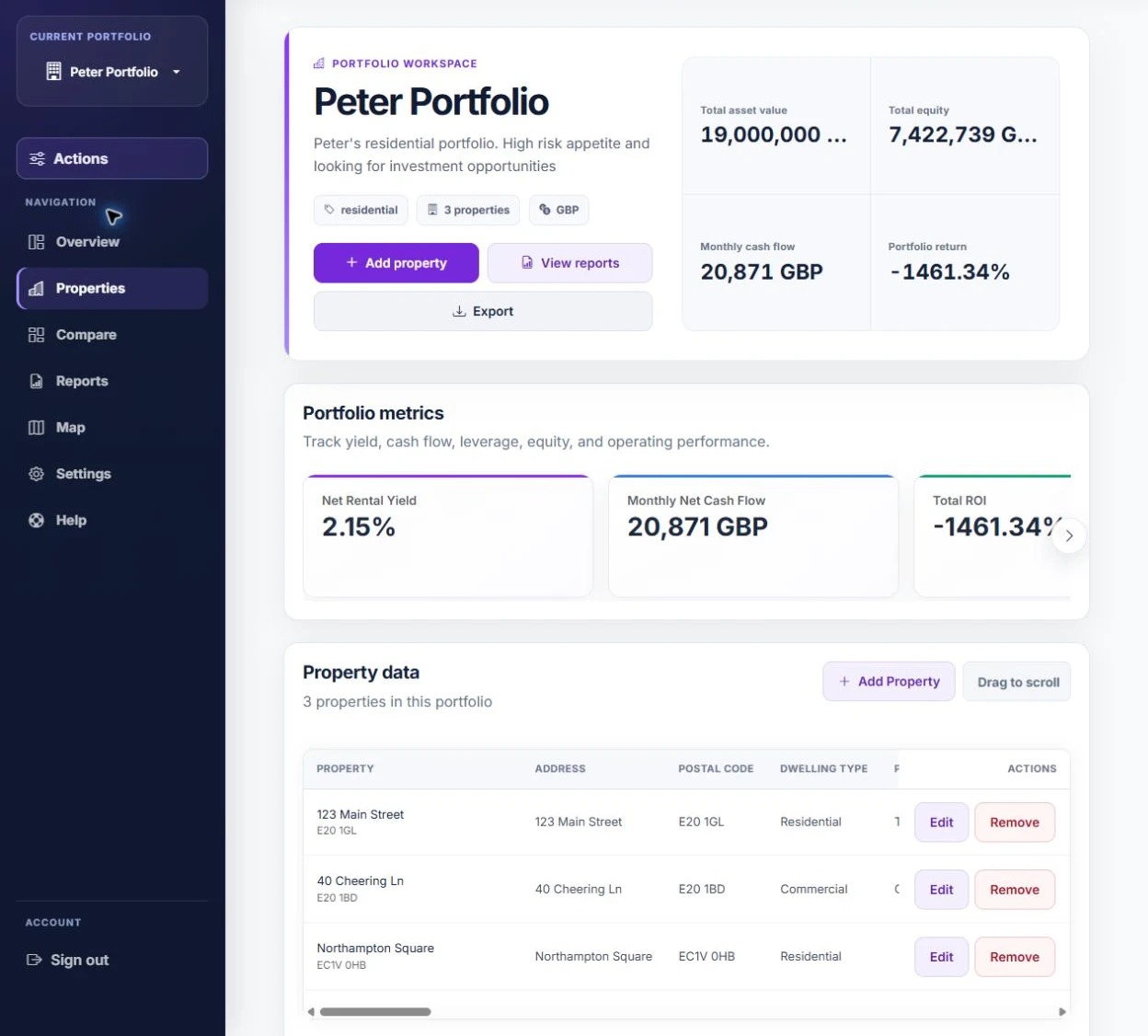
Dwellytics
Website design and web app development for a property analytics client. The case study explains the application and its implementation.
Read the case studyCommon questions.
What is the difference between a website and a web application?
A website mainly presents information. A web application lets people complete tasks, save information or use a service. We can scope both when a business needs a public site and an application.
Can you help if we do not have a technical specification?
Yes. Describe the users, current process and problem. We can agree a discovery phase to define requirements and constraints before quoting for development.
How much does software development cost?
Cost depends on workflows, roles, data and integrations. We agree the scope, pricing approach and delivery stages first. Hosting, external services and ongoing support are identified separately.
Can the software connect to our existing tools?
Often, if they provide suitable APIs or another supported connection. We check access, data formats, permissions and provider charges before including an integration.
How are changes handled during development?
We explain the effect on cost and timing, then agree changes before proceeding. Other ideas can be kept for a later release.
Who owns the software and production accounts?
The agreement identifies ownership, retained components and third-party licences. Handover includes agreed source or repository access, production accounts and operating documentation.
What happens after launch?
The support agreement names who operates hosting, handles updates and investigates issues. It records included work, response arrangements and how additional development is quoted.
Do you build native mobile and desktop applications?
This service focuses on browser-based applications. Native mobile or desktop applications need a separate discussion and scope.